
|
LISTEN TO THE AUDIO VERSION
Getting your Trinity Audio player ready...
|
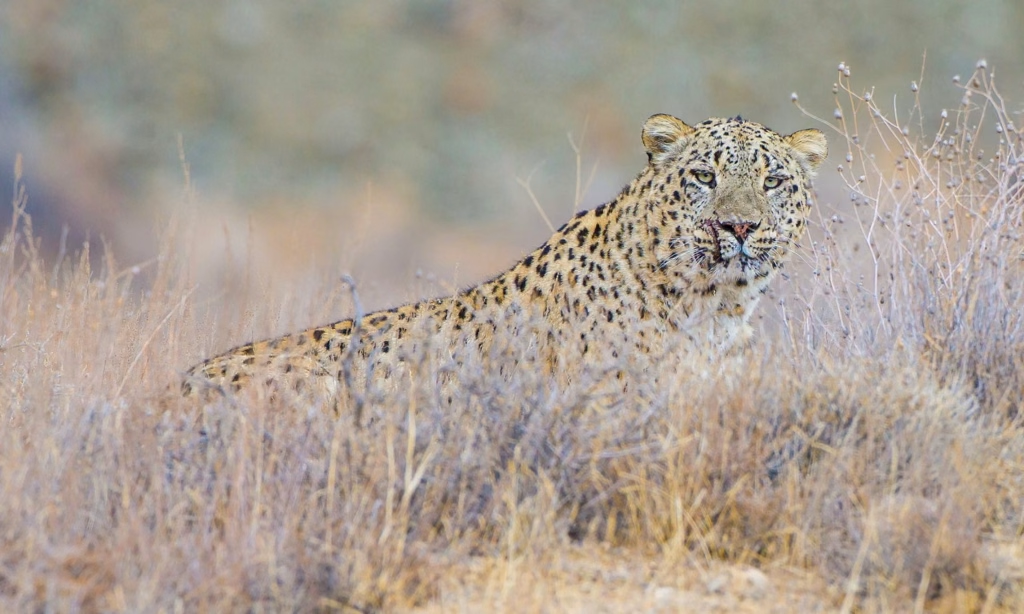
Persian leopard, Photograph: Behzad Farahanchi
Abstract
Human attitudes toward large carnivores are shaped by multiple interrelated socio-psychological factors, yet conservation interventions often focus on reducing material impacts while paying less attention to underlying attitude drivers. We investigated attitudes towards three large carnivore species: Persian leopard (Panthera pardus), grey wolf (Canis lupus), and brown bear (Ursus arctos) among communities around Golestan National Park, Iran. Using interview data from 292 participants across 30 villages, we applied Bayesian structural equation modelling to examine how cognitive beliefs, social beliefs, perceived management responsibility, and livestock loss relate to attitudes towards each species. Cognitive beliefs emerged as the strongest predictor across all three species, whereas social beliefs, management responsibility, and livestock loss varied in influence. The limited role of livestock loss suggests that reducing carnivore impacts alone is insufficient to promote coexistence. Instead, conservation efforts should combine practical conflict-mitigation measures with strategies engaging local beliefs, social norms, and expectations of wildlife management.